

Diabetic foot ulcers affect a substantial portion of individuals with diabetes, with estimates ranging between 15 and 25 percent.
A meaningful percentage of these patients require hospitalization due to complications such as infection, tissue necrosis, or amputation.
Chronic wounds linked to diabetes carry high amputation and mortality rates.
Hyperbaric oxygen therapy functions as an adjunctive option added to standard wound care to support healing and limit amputation risk.
What Is Hyperbaric Oxygen Therapy (HBOT)?
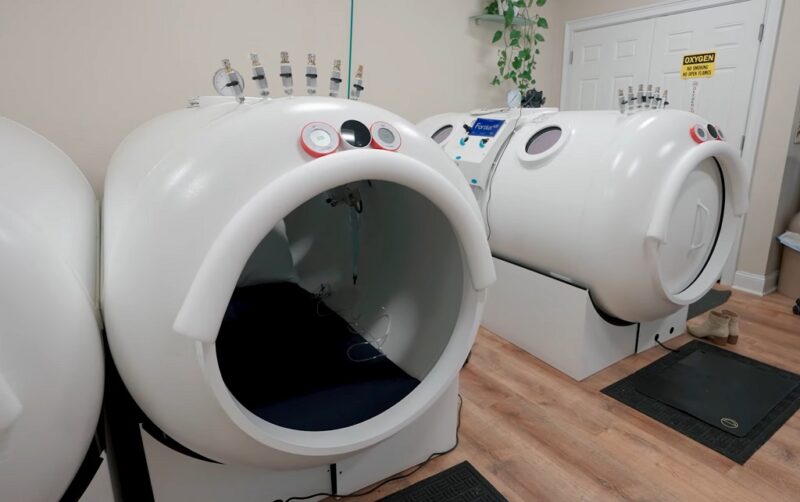
HBOT functions as a controlled medical intervention in which a patient breathes pure oxygen inside a pressurized chamber set between 2.0 and 2.5 ATA.
Such pressure levels allow oxygen to dissolve into plasma at concentrations far higher than possible under normal atmospheric conditions.
Greater oxygen tension elevates tissue saturation in ways standard breathing cannot achieve, particularly in areas compromised by reduced blood flow.
That increase influences numerous cellular and biochemical pathways central to wound repair.
Enhanced oxygen delivery initiates several physiological responses. Patients gain improved tissue oxygenation, stimulation of angiogenesis, stronger fibroblast activity, and more efficient collagen formation.
Infection control also improves because leukocytes operate with stronger bactericidal capacity in high-oxygen environments. Reductions in edema further support tissue recovery by easing pressure around damaged structures.
Several practical tasks benefit from these effects, particularly management of non-healing, ischemic, or infected wounds that have stalled under routine care.
Practical Perspectives from Clinical Practice
Early use of HBOT is encouraged in clinical settings to prevent infections from advancing and to avoid the need for amputation.
Many patients referred after prolonged non-healing demonstrate stronger responses when HBOT is added promptly rather than late in care.
Experienced wound care teams manage patient evaluation, dressing strategies, medication coordination, and glucose monitoring throughout treatment.
Their involvement allows continuous adjustment of the plan according to healing progress, comfort levels, and comorbidities.
HBOT contributes to the treatment of several wound categories outside diabetic ulcers, including arterial ulcers, venous ulcers, pressure injuries, radiation-associated tissue damage, and wounds following complex surgical procedures.
For those interested in exploring HBOT and longevity-focused protocols, especially in California, the Longevity Beverly Hills center, Oxynergy2®, offers personalized hyperbaric oxygen therapy combined with integrative services like red light therapy, IV vitamin drips, and compression therapy tailored to enhance wound recovery, cellular repair, and healthy aging.
Clinical Application of HBOT in Diabetic Ulcers
Expanded clinical use reflects the growing recognition of oxygen deficiency as a core barrier to healing in diabetic ulcers. Patients who experience prolonged ulcer duration often develop a cycle of inflammation, infection risk, and impaired cellular activity.
Indications
HBOT may be applied to diabetic ulcers across all severity levels, including early-stage wounds.
Early involvement supports stronger healing potential and reduces the likelihood of deterioration into deep infection or tissue loss.
Many regions include financial coverage for these sessions across all ulcer categories.
The greatest benefit appears in ulcers demonstrating compromised oxygenation, advancing infection, or limited improvement despite well-executed standard care.
Certain situations call for clarification about primary treatment goals, and meaningful clinical indicators can be seen:
- Presence of ischemic tissue that fails to improve despite optimized circulation-focused therapy
- Evidence of persistent microbial burden despite culture-guided antibiotics
- Delayed granulation or stalled epithelialization over several weeks
Treatment Protocol

HBOT programs follow structured timelines to ensure consistency and adequate exposure. Sessions commonly last between 90 and 120 minutes.
Thirty sessions form a frequently used baseline plan; however, research involving forty sessions recorded stronger reductions in major amputation rates, indicating that extended treatment can sometimes produce superior outcomes.
A referral from a primary care clinician or specialist initiates the process. Evaluation by an HBOT physician follows, including assessment of ulcer characteristics, comorbid conditions, and risk factors.
Reassessment after the treatment cycle helps determine progress and need for adjustments.
Certain steps in the clinical pathway rely on coordinated tasks that support safe delivery:
- Verification of glucose stability before each session
- Monitoring for ear pressure intolerance and oxygen-related symptoms
- Periodic photographic documentation to track wound evolution
Evidence from Clinical Studies and Meta-Analyses
Expanded evaluation of research outcomes supports a clearer view of HBOT’s benefits and constraints. Effects vary according to ulcer severity, oxygen pressure, and adherence to treatment duration.
Findings from a 2021 Systematic Review and Meta-analysis

A large evaluation covering fourteen trials and 768 patients compared HBOT to standard care alone.
Those receiving HBOT achieved higher rates of full ulcer healing. A pronounced decrease in major amputations emerged in the HBOT group, reflecting improved tissue salvage.
Minor amputations showed no meaningful variation, suggesting differences may depend on ulcer type and depth rather than oxygen therapy alone.
Adverse events occurred more frequently among HBOT participants. Recorded issues included ear barotrauma, changes in blood glucose levels, rare oxygen-induced seizures, and temporary ocular changes.
Mortality outcomes did not differ significantly between groups.
Ulcer area reduction did not reach statistical significance, highlighting complexity in interpreting intermediate wound measurements.
Several findings gained clarity when viewed in structured format:
- Healing success increased substantially with HBOT
- Major amputations decreased
- Minor amputations showed no notable change
- Adverse events occurred more frequently but remained manageable
Limitations Highlighted in the Meta-analysis
Study protocols varied greatly in pressure levels, duration of exposure, oxygen dosage, and outcome definitions. Such differences limit direct comparison across trials.
Only six studies included adequate power calculations, raising concerns about reliability in some estimates. Randomization and blinding varied, influencing risk of bias.
Evidence of publication bias appeared in healing outcomes, suggesting that positive studies may have been more likely to be published.
Several challenges emerge when assessing internal study quality, and key concerns can be grouped:
- Inconsistent methodology across trials
- Limited sample size justification
- Variable follow-up periods
- Incomplete documentation of adverse event protocols
Risks and Considerations
HBOT carries risks that must be evaluated before entry into treatment. Middle ear barotrauma appears most frequently due to pressure changes.
Transient shifts in vision occur in some patients and usually resolve after treatment completion.
Diabetic patients may experience episodes of low blood glucose and require monitoring before and after sessions.
Rare oxygen toxicity events, including seizures, have been documented. Contraindications include untreated pneumothorax and certain pulmonary or ear-related conditions.
Any history of recent ear surgery warrants careful review before clearance.
Coverage varies by region, and consistent attendance may be difficult for those with limited mobility or transportation challenges.
Important practical issues deserve attention, and several factors often determine patient suitability:
- Ability to attend scheduled sessions regularly
- Stability of chronic health conditions
- Presence of sensory or mobility limitations affecting chamber tolerance
Final Thoughts
HBOT offers strong support for healing diabetic ulcers and lowering the chances of major amputation when paired with evidence-based wound care.
Risks exist but remain manageable with proper screening and supervision.
Earlier adoption in the treatment sequence often leads to better results, especially for ulcers showing delayed healing or poor response to standard interventions.