

Spiritual wellness centers on inner peace, purpose, connection, meaning, and a sense of something larger than personal stress or daily pressure. It gives people a way to feel grounded, especially during periods when life feels uncertain, demanding, or emotionally heavy.
Meditation, sound, and relaxation meet in a practical space between emotional care and spiritual care. Meditation can calm racing thoughts. Sound can guide attention and create a soothing environment. Relaxation can help the body release tension that builds during stress.
Sound healing is often described as a low-cost, low-technology wellness method. It does not require complex equipment or advanced training to begin.
For many people, calming sounds, singing bowls, nature sounds, or guided sound sessions create a gentle path toward emotional relief and spiritual connection.
Connection Between Spiritual Wellness and Mental Health

Spiritual wellness and mental health are closely tied because both involve meaning, emotional balance, connection, and personal stability.
People often turn toward spiritual practices when they need comfort, purpose, or a sense of direction during stressful periods.
Research has linked spirituality with well-being, life satisfaction, quality of life, and improved mental health across different stages of life.
Such connections matter because mental health is not only about reducing symptoms. It also involves feeling connected, supported, hopeful, and able to cope with daily life.
Periods of stress can make spiritual wellness more important. Stress often brings uncertainty, fear, tension, and emotional fatigue.
Spiritual practices may help people step back, reflect, and reconnect with values, gratitude, compassion, or a sense of inner calm.
Chronic psychosocial stress has also been connected with anxiety, depression, and physical health concerns.
Long-term stress can affect sleep, mood, energy, focus, and the body’s ability to recover.
Practices that support spiritual and emotional well-being may help people manage tension, depressed mood, and stress-related pressure in a healthier way.
Important links between spiritual wellness and mental health include:
- A stronger sense of meaning during difficult periods
- Better emotional stability during stress
- Greater connection with self, others, nature, or a higher purpose
- Lower tension when calming practices are used regularly
- More space for reflection instead of automatic stress reactions
Spiritual wellness does not remove every mental health challenge. It can, however, support coping by helping people feel less disconnected, less overwhelmed, and more anchored in daily life.
Meditation and Relaxation
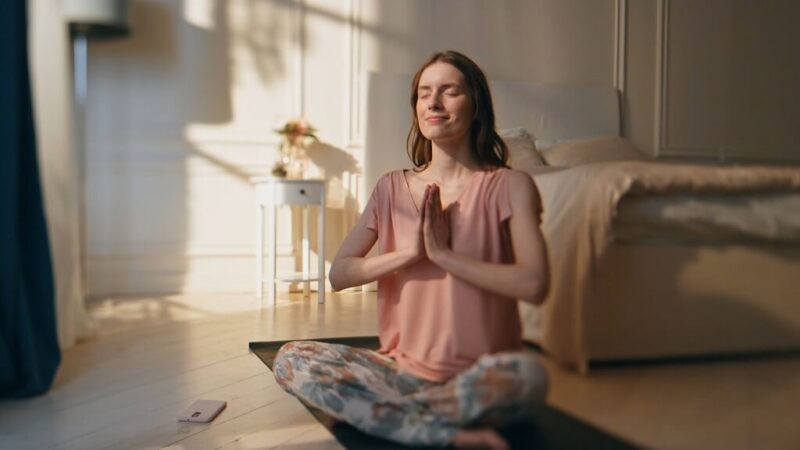
Meditation encourages mindfulness, focus, and calm. It teaches people to notice thoughts and emotions without immediately reacting to them.
Over time, that kind of awareness can help reduce mental noise and create more room for emotional control.
Relaxation helps reduce stress, tension, and emotional overwhelm.
When the body relaxes, breathing often slows, muscles soften, and the nervous system can move away from a high-alert state. Such physical changes can support clearer thinking and a more settled mood.
Mindfulness-Based Stress Reduction has been associated with stress reduction and increased spirituality.
Such findings suggest that meditation may help people not only feel calmer, but also more connected to meaning, presence, and inner awareness.
Singing bowl meditation research adds another important point.
Participants reported significantly less tension, anger, fatigue, and depressed mood after a session with healing singing bowls.
Spiritual well-being also increased after the session, showing a connection between emotional relief and spiritual wellness.
Sound-based relaxation may be especially useful for people who struggle with silent meditation.
Some forms of meditation require practice, patience, and focus that can feel difficult at first. Sound gives the mind something steady to follow, which may make the experience easier and less intimidating.
Several relaxation effects can happen during meditation or sound-based practice:
- Breathing can become slower and more even
- Muscle tension may decrease
- Attention can shift away from stressful thoughts
- Mood may feel lighter after a calming session
- Spiritual awareness may increase as mental clutter quiets
Meditation and relaxation work best as supportive habits, not instant fixes. Even short sessions can help when used consistently, especially during stressful days or before sleep.
Sound Healing and Mental Wellness

Sound healing uses vibration, rhythm, frequency, and calming sounds to support relaxation and emotional well-being.
Instead of relying only on silence, it uses sound as an anchor for attention and a tool for calming the body.
Common sound healing tools include singing bowls, gongs, chimes, Tibetan bowls, crystal bowls, and nature sounds.
Some sounds feel soft and steady, while others feel spacious, rhythmic, or immersive.
Sound baths are often described as experiences where sound and vibration seem to wash over the body.
They combine parts of music therapy and meditation, giving people a chance to rest while tones move through the room. Many people use them for stress relief, emotional release, and spiritual reflection.
Beneficial sounds are linked with reduced anxiety, greater relaxation, better focus, and a stronger mind-body connection.
Harsh sounds can have the opposite effect, increasing stress, irritability, and fatigue.
Sound quality matters because the nervous system can respond differently to calming tones than it does to loud, sharp, or chaotic noise.
Nature sounds are also commonly used for mental and spiritual wellness.
Birdsong, ocean waves, waterfalls, rainfall, and rustling leaves are often presented as calming sounds that support mindfulness, safety, serenity, and inner peace.
Sound healing should not be treated as a cure for mental health conditions.
It can be a supportive wellness practice that works alongside healthy routines, rest, therapy, medical care, and other mental health support when needed.
Where Meditation, Sound, and Relaxation Meet

Meditation, sound, and relaxation meet through attention, awareness, and nervous system calming. Sound gives the mind something specific to focus on.
Meditation helps people notice thoughts, emotions, and inner patterns. Relaxation allows the body and mind to release stress and tension.
For people who find silent meditation difficult, sound can act like a bridge. A singing bowl tone, soft chime, rainfall track, or ocean wave sound can guide attention back to the present moment. Instead of trying to clear the mind, people can listen, breathe, and settle.
Research on singing-bowl sound healing found significant correlations between improved spiritual well-being and reduced tension and depression after sound healing.
That connection suggests that emotional relief and spiritual wellness may improve together during calming sound practices.
Age-related findings added more detail. In a study of 62 participants, the link between spiritual well-being and depression improvement was strongest among ages 31 to 40.
The connection between spiritual well-being and tension improvement was strongest among ages 51 to 60.
Possible explanations for sound healing effects include brainwave changes, binaural beats, vibration, and possible vagus nerve activation.
More research is still needed, but current findings suggest sound may affect both mental state and physical relaxation.
Meditation, sound, and relaxation do not need to be complicated. A short session with steady breathing and calming sound can create a pause in the day.
That pause may help people feel more centered, less reactive, and more connected to themselves.
Summary
Spiritual wellness and mental health connect through meaning, connection, emotional balance, and stress management.
When people feel grounded spiritually, they may have more tools for coping with stress, tension, and emotional strain.
Meditation, sound, and relaxation offer simple ways to support both mental and spiritual well-being.
Current research suggests sound meditation may reduce tension, anxiety, depressed mood, anger, and fatigue while increasing spiritual well-being.