
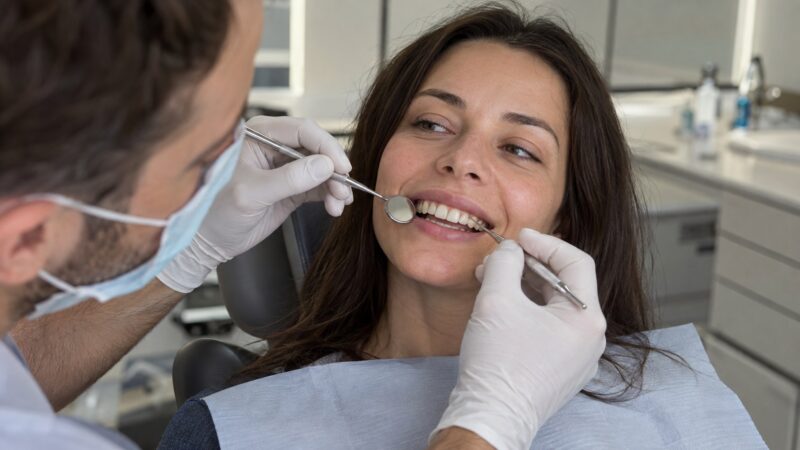
A small chip, an uneven front tooth or a worn edge can change the appearance of a smile without causing major damage to the tooth itself. Two cosmetic treatments commonly considered in these situations are porcelain veneers and composite bonding.
Both can change the visible shape of a tooth, close small gaps and improve symmetry, but they do it in very different ways. Composite bonding adds tooth-coloured resin directly to the existing tooth. A porcelain veneer is a thin custom-made shell that covers the front surface of the tooth.
For a minor chip or small difference in tooth shape, bonding is usually the more conservative starting point. Veneers become more relevant when several teeth need a larger change in shape, colour or overall appearance.
The condition of the tooth, bite and enamel still needs to be checked before either treatment is chosen, which is why an in-person assessment at a cosmetic dental clinic such as MaryleboneSmileClinic can help determine which option is appropriate.
Veneers and Composite Bonding Compared
| Feature | Composite Bonding | Porcelain Veneers |
| Best suited to | Small chips, uneven edges, minor gaps and modest shape changes | More extensive changes to shape, colour and several visible teeth |
| Material | Tooth-coloured composite resin | Thin ceramic or porcelain shell |
| Tooth preparation | Usually little or no enamel removal | Usually requires some enamel removal |
| Appointments | Often completed in one visit | Usually requires more than one visit |
| Repair | Usually straightforward to add or repair resin | A damaged veneer may need laboratory repair or replacement |
| Staining | More likely to stain over time | Porcelain is more resistant to staining |
| Typical lifespan | Often around 3 to 10 years | Often around 10 to 20 years |
| Reversibility | Often reversible when enamel has not been removed | Usually irreversible because enamel is prepared |
The Cleveland Clinic describes bonding as a minimally invasive treatment that can repair chips, alter tooth shape and close small spaces. It also notes that bonding usually needs less enamel removal than porcelain veneers.
Composite Bonding Works Well for Small Chips and Uneven Edges

Composite bonding is one of the simplest ways to rebuild a small piece of missing tooth. The dentist applies resin directly to the tooth, shapes it to match the surrounding enamel and hardens it with a curing light.
For a front tooth with one chipped corner, bonding can restore the missing section without covering the entire visible surface. The same technique can lengthen a slightly shorter tooth, smooth an uneven edge or make two neighbouring teeth look more balanced.
Bonding is also useful when only one or two teeth need relatively small changes. The dentist controls the shape directly during treatment, and the procedure is commonly completed during a single appointment.
Another advantage is preservation of the natural tooth. Bonding usually requires little preparation, and some cases require no enamel removal at all.
Veneers Are Better Suited to Larger Cosmetic Changes
Porcelain veneers cover most of the visible front surface of a tooth. Instead of rebuilding only a chipped corner, a veneer changes the appearance of the whole face of the tooth.
That makes veneers more useful when the concern extends beyond one small defect. Someone may have several front teeth with different shapes, uneven lengths, persistent discolouration or a combination of cosmetic concerns.
Veneers are also commonly included in a broader smile makeover when several visible teeth are being improved at the same time.
According to the NHS, veneers are thin facings used to disguise problems such as chipped or discoloured teeth. Some enamel may need to be removed from the front of the tooth before the veneer is fitted.
Porcelain also keeps its colour better than composite resin. Coffee, tea, red wine and smoking can gradually affect the appearance of bonding, while ceramic restorations are considerably more resistant to external staining.
For a Small Chipped Tooth, Bonding Is Usually the Simpler Option
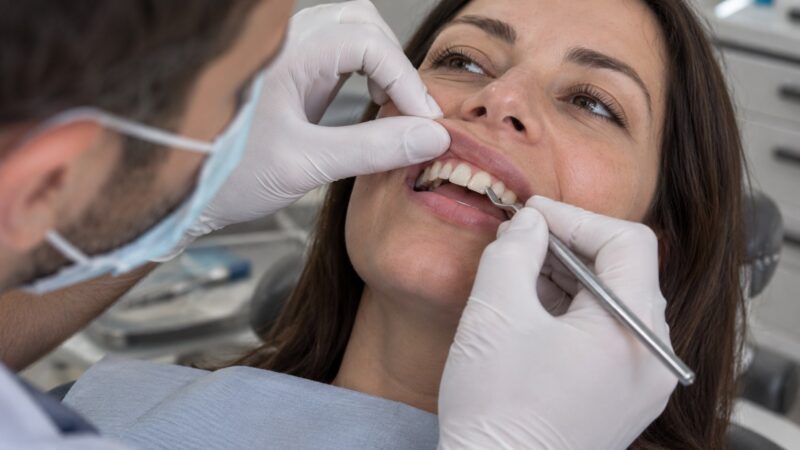
A minor chip does not automatically justify covering the whole tooth with porcelain. If the remaining tooth is healthy and enough enamel remains, composite resin can often replace only the missing portion.
That approach preserves more natural tooth structure and keeps future treatment options open. If the bonding chips years later, the dentist can usually repair or replace the affected resin without remaking the entire tooth.
A larger chip needs a different assessment. Damage that extends deeper into the tooth may require a filling, crown, root canal treatment or another restorative procedure rather than cosmetic bonding alone.
The NHS guidance on chipped and broken teeth advises seeing a dentist after a tooth chips or breaks. A cosmetic defect may look minor from the outside even when a crack or deeper damage is present.
Uneven Teeth Need a Closer Look Before Choosing Either Treatment
The phrase uneven teeth can describe several different problems. One tooth may simply be shorter than its neighbour. Another person may have worn edges, small gaps, rotated teeth or more noticeable crowding.
Bonding works particularly well when the difference is small. Resin can add a millimetre or two to an edge, improve symmetry or alter the apparent width of a tooth.
Veneers give the dentist more freedom when several visible teeth need substantial reshaping. They can create a more uniform surface across the front teeth and change both shape and colour at the same time.
More pronounced crowding or bite problems need a different conversation. Adding material to already crowded teeth can make them look bulky, and removing enamel simply to disguise poor alignment is not always the best route. Orthodontic treatment may be discussed first when tooth position is the main problem.
Bonding Removes Less Natural Tooth Structure
Preserving enamel is one of the strongest arguments for composite bonding.
The tooth surface is prepared so the resin can bond securely, but substantial drilling is generally unnecessary. If no enamel has been removed, the treatment can also be reversed more easily later.
Traditional porcelain veneers usually require some reduction of the enamel so the ceramic can sit naturally without making the tooth look too thick. Once enamel has been removed, the tooth will normally continue to need a veneer or another restoration in the future.
Anyone in their twenties or thirties considering a major cosmetic change should think about that long-term commitment as well as the immediate appearance.
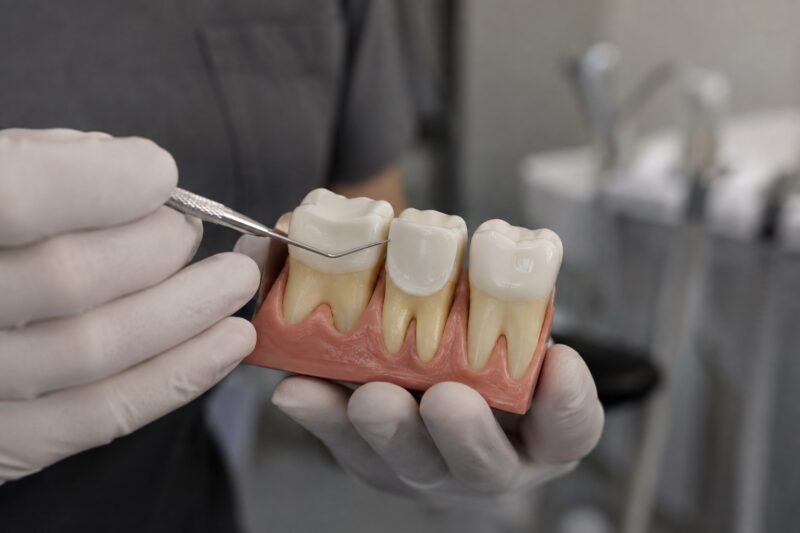
Veneers Usually Last Longer
Composite resin is durable enough for normal eating, but it is softer than porcelain. Small chips, surface wear and loss of polish become more likely as the years pass.
Cleveland Clinic gives a typical lifespan of around three to 10 years for dental bonding, depending on the number of teeth treated, oral habits and how the restoration is cared for. Porcelain veneers commonly last around 10 to 20 years before replacement becomes necessary.
Neither treatment lasts forever. Teeth grinding, nail biting, chewing pens and using teeth to open packaging increase the risk of damage to both natural teeth and cosmetic restorations.
Composite Bonding Is Easier to Repair
One practical advantage of composite is the way it can be repaired. If a small section chips, a dentist can often add new resin to the damaged area, reshape it and polish the surface again.
Repairing porcelain is less straightforward. A small defect may sometimes be polished or repaired, but a fractured veneer can require complete replacement.
For someone who grinds their teeth at night or regularly places heavy pressure on the front teeth, the dentist may also discuss a protective night guard after treatment.
Porcelain Holds Its Appearance Better Over Time
Fresh composite bonding can look extremely natural. Dentists use different shades and layers of resin to reproduce the colour and translucency of enamel.
The main limitation appears later. Composite resin gradually loses some surface polish and picks up stains more readily than porcelain. Periodic polishing helps maintain its appearance.
Porcelain is less porous and maintains its surface finish more consistently. For someone planning a larger smile change across several teeth, that stability is one reason veneers remain popular despite the additional tooth preparation.
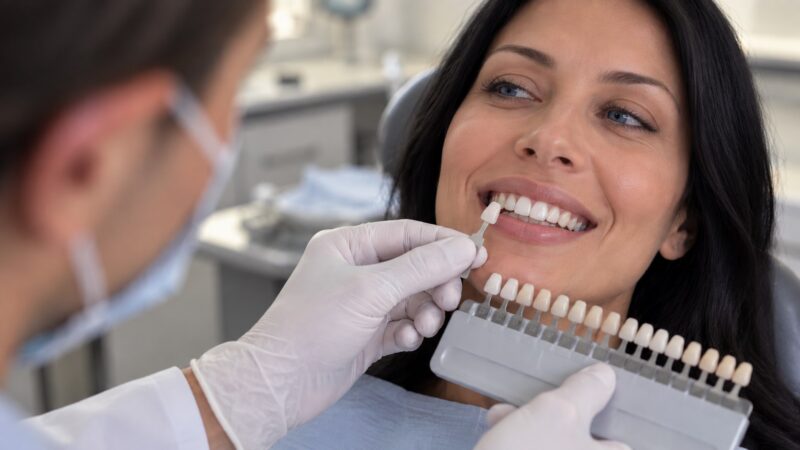
Cost Should Be Considered Over More Than One Treatment
Composite bonding generally has the lower initial price because the restoration is created directly in the dental chair and does not usually require a dental laboratory.
Porcelain veneers cost more at the beginning because each veneer is individually designed and manufactured before being bonded to the tooth.
Initial price only tells part of the story. Bonding will usually need polishing, repairs or replacement sooner, while a well-maintained porcelain veneer generally stays in service longer. The relevant comparison is therefore the cost over several years rather than the price of the first appointment alone.
Cosmetic treatments are normally provided privately in the UK. The NHS explains that treatment needed to maintain oral health may be available through NHS dentistry, while cosmetic work is generally private.
A Proper Dental Assessment Should Come Before the Cosmetic Decision
A photograph can show that a tooth is chipped or uneven, but it does not show everything a dentist needs to know. Enamel thickness, existing fillings, tooth decay, gum health, bite forces and signs of grinding all influence the choice between bonding and veneers.
Anyone comparing cosmetic options should always consult with a well-known clinic to have the teeth examined in person before deciding how much treatment is actually needed.
Teeth with more extensive structural damage may need restorative options rather than purely cosmetic treatment, and in more advanced cases this can include dental implants.
When Composite Bonding Is Usually the Better Fit
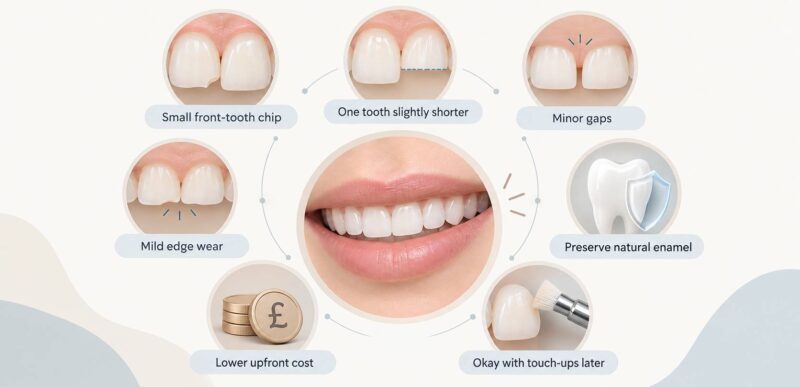
Composite bonding deserves serious consideration when the teeth are healthy and the cosmetic change is relatively small.
- A small corner has chipped from a front tooth.
- One tooth is slightly shorter than the tooth beside it.
- Minor gaps need closing.
- The edges of several teeth have mild wear.
- Preserving as much natural enamel as possible is a priority.
- A lower initial treatment cost is important.
- The patient is comfortable with future polishing and occasional repairs.
When Porcelain Veneers Are Usually the Better Fit
Veneers become more relevant when the planned change is larger or involves several cosmetic concerns at once.
- Several front teeth need significant reshaping.
- Shape and colour both need changing.
- Existing discolouration is difficult to disguise with conservative treatment.
- A longer-lasting restoration is a priority.
- Resistance to staining is particularly important.
- The patient accepts that some enamel preparation may be required.
Veneers vs Composite Bonding, Which Is Better?
For a small chip, slightly uneven edge or modest change to one or two healthy teeth, composite bonding is usually the more conservative option. It requires less alteration of the natural tooth, costs less initially and is easier to repair later.
Porcelain veneers become more suitable when several teeth need a larger and more consistent change in shape or colour. They cost more and usually require enamel preparation, but they resist staining better and generally last longer.
The size of the cosmetic problem should guide the amount of dentistry used to correct it. A tiny chip does not automatically need a veneer, and a major smile redesign may exceed what composite resin can reliably provide. A dental examination is the best way to establish where on that scale each tooth sits.