Have you noticed that your front teeth look shorter than they did a few years ago? Perhaps the edges have become uneven, or the tips look slightly transparent. Changes like these can be signs of tooth wear, and many people do not realise anything is happening until the difference becomes visible.
Teeth grinding, acidic drinks, and certain medical conditions can gradually damage enamel. In some cases, several factors contribute to the problem at the same time.
Although a small amount of wear is normal as we age, noticeable changes in tooth shape deserve attention. Lost enamel cannot grow back, but dentists have several ways to protect damaged teeth and restore their appearance.
How Can You Tell If Your Front Teeth Are Wearing Down?
Front teeth naturally vary in length and shape. Some people have slightly uneven edges throughout their lives, so an irregular appearance does not automatically mean something is wrong.
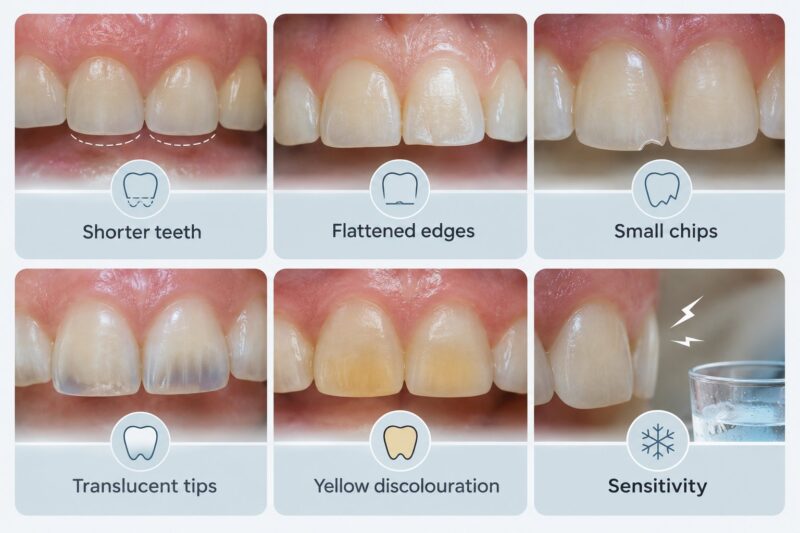
- Shorter teeth: The biting edges gradually lose height, making the front teeth appear smaller.
- Flattened edges: Teeth that previously had rounded edges may develop flat surfaces.
- Small chips: Weakened edges can break during normal eating.
- Greater transparency: Thin areas of enamel can make the tips appear translucent.
- Yellow discolouration: As enamel becomes thinner, the underlying dentine may become more visible.
- Sensitivity: Cold drinks or certain foods may cause discomfort when the protective enamel layer becomes thinner.
Not everyone experiences pain. Your teeth might continue wearing down for years without producing any significant discomfort.
Comparing recent photographs with older pictures can help you notice changes in tooth length. However, a dentist needs to examine the teeth to determine if active wear is occurring.
Teeth Grinding Is One of the Main Causes
Grinding your teeth, known as bruxism, can gradually flatten the biting edges of your front teeth.
During grinding, the upper and lower teeth repeatedly move against each other under pressure. Over time, the contact can remove enamel and create worn surfaces.
Many people grind their teeth during sleep and have no idea it is happening. A partner might hear grinding noises, or the person may wake up with a sore jaw.
Some of the possible reasons are stress, anxiety, sleep problems, and certain medications as possible contributing factors.
Other symptoms include morning headaches, jaw discomfort, and sensitive teeth.
Nighttime teeth grinding can also coexist with sleep disorders such as obstructive sleep apnoea.
If grinding is damaging your teeth, a dentist may recommend a custom night guard. The appliance creates a barrier between the teeth and reduces the risk of further damage. However, it does not necessarily stop the grinding itself.
Available Treatments for Worn Front Teeth
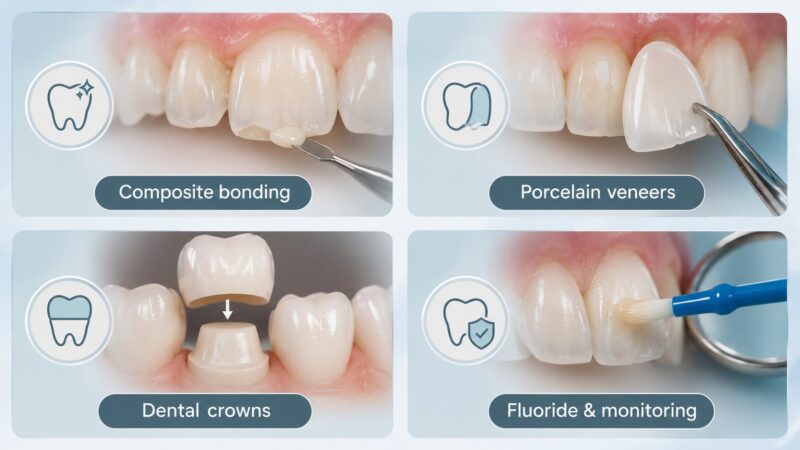
The appropriate treatment depends on the amount of remaining enamel, the condition of the underlying dentine, and the cause of the wear.
Composite Bonding
Composite bonding is commonly used to repair small chips and rebuild worn biting edges.
A dentist applies tooth-coloured resin directly to the damaged area, shapes it to match the natural tooth, and hardens it using a special light.
For someone whose two front teeth have become slightly shorter, bonding may restore their original proportions without extensive preparation.
The material can chip, stain, or wear over time. Patients who grind their teeth may need extra protection to reduce the risk of damaging the restoration.
Porcelain Veneers
Porcelain veneers are thin ceramic coverings attached to the front surfaces of teeth. They can improve the appearance of worn edges, irregular tooth shapes, and certain types of discolouration.
Patients from the UK should look for terms like veneers London, or any other place where you live, and then to compare those dentists to check out experience of previous patients, along with prices and other details.
Some veneers require the removal of a thin layer of natural enamel. The procedure can therefore be irreversible, and the restoration may need replacing in the future.
Patients with significant grinding or uncontrolled erosion may not be suitable candidates until the underlying cause has been addressed.
Dental Crowns
When a front tooth has lost a substantial amount of its structure, a dental crown may be necessary.
Unlike a veneer, which primarily covers the visible front surface, a crown covers the tooth more extensively.
Crowns can restore damaged teeth and provide protection when enough healthy structure remains to support the restoration.
However, preparing a tooth for a crown generally requires removing additional natural material. Dentists may therefore recommend bonding or another less invasive treatment for teeth with relatively minor wear.
Fluoride Treatments and Monitoring
Not every patient needs bonding, veneers, or crowns.
For early erosion without substantial loss of tooth structure, a dentist may recommend fluoride treatments, changes to daily habits, and periodic examinations.
Dental photographs or digital scans can help monitor changes in tooth shape over time.
If sensitivity is present, suitable toothpaste or professionally applied fluoride products may help reduce discomfort.
Acidic Drinks Can Gradually Dissolve Tooth Enamel

Another common cause of front tooth wear is dental erosion, which occurs when acid gradually dissolves the mineral structure of enamel.
Energy drinks, fizzy drinks, fruit juices, and acidic sweets can all contribute to erosion. Drinks containing no sugar may still be acidic enough to affect enamel.
Frequency is an important factor. Drinking a glass of orange juice with breakfast is different from sipping the same juice repeatedly throughout the morning.
Repeated acid exposure gives saliva less opportunity to neutralise the acid and support the natural repair of early mineral loss.
The UK government’s research on tooth wear and its prevention recommends reducing the frequency of acidic drinks and keeping them to mealtimes.
People who regularly consume acidic drinks should also avoid holding them in their mouths before swallowing.
Stomach Acid Can Damage the Back of Your Front Teeth
Not all dental erosion comes from food and drinks. Stomach acid can reach the mouth because of acid reflux or repeated vomiting.
Gastroesophageal reflux disease, also called GERD, allows stomach contents to move back into the oesophagus. In some cases, acid reaches the mouth and damages tooth enamel.
The inner surfaces of the upper front teeth can be particularly affected. As the enamel becomes thinner, the teeth may develop fragile edges that chip more easily.
Some people experience reflux without obvious heartburn, which can make the cause of erosion harder to recognise.
A dentist may suspect acid erosion after examining the pattern of wear. If reflux is suspected, medical assessment may be necessary to address the underlying problem.
Restoring the damaged teeth without addressing repeated acid exposure could leave the new restorations at risk.
View this post on Instagram
Can Brushing Too Hard Wear Down Your Teeth?
Yes, although aggressive brushing generally causes more damage around the gumline than along the biting edges of front teeth.
Using excessive pressure or highly abrasive toothpaste can gradually remove tooth structure. The process is called abrasion.
Some people assume that brushing harder removes more plaque. In reality, excessive force can damage the gums and contribute to tooth wear.
A soft toothbrush and gentle brushing technique are suitable for most adults. People with established erosion should ask their dentist about toothpaste abrasiveness and any additional fluoride treatment they may need.
Your Bite May Also Be Contributing to the Damage
The position of your teeth affects how they contact each other during chewing and other jaw movements.
If certain front teeth experience repeated heavy contact, they may wear unevenly. Grinding can make the problem worse.
For example, one front tooth might become noticeably shorter than the neighbouring tooth because it receives more pressure during particular jaw movements.
A dentist can examine how your upper and lower teeth meet. In selected cases, orthodontic treatment may help correct a bite problem contributing to the wear.
Can Worn Front Teeth Be Repaired?
Enamel cannot regenerate once physical tooth structure has been lost. Fluoride can support the repair of early mineral changes, but it cannot rebuild a missing biting edge.
Fortunately, visible tooth wear does not always require extensive dental treatment.
If the damage is minor and no longer progressing, your dentist may recommend monitoring the teeth and addressing the cause. More significant wear may require restoration to improve tooth shape, comfort, or function.
How to Prevent Further Wear on Your Front Teeth
Prevention depends on the cause of the damage. A person with acid erosion needs a different approach than someone whose teeth are becoming shorter because of nighttime grinding.
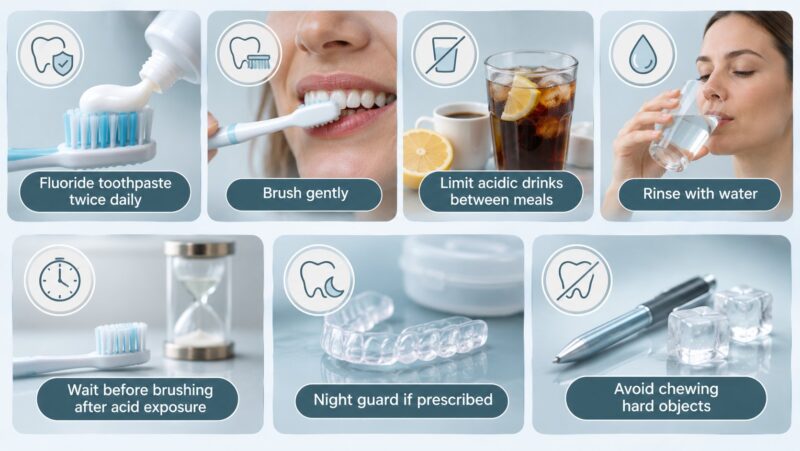
- Brush twice daily using fluoride toothpaste.
- Avoid excessive pressure when brushing.
- Reduce frequent consumption of acidic drinks between meals.
- Use water to rinse your mouth after vomiting or acidic drinks.
- Avoid brushing immediately after significant acid exposure.
- Wear a professionally fitted night guard if recommended by your dentist.
- Stop habits such as biting pens, chewing ice, or opening packaging with your teeth.
People with persistent reflux or repeated vomiting should also seek appropriate medical care.
Certain dietary and lifestyle changes may also help relieve acid reflux naturally and reduce repeated exposure to stomach acid.
Restorations need maintenance too. The American Dental Association’s information on veneers explains that veneers can chip, loosen, or require replacement. Continued grinding can increase the risk of problems.
When Should You See a Dentist?
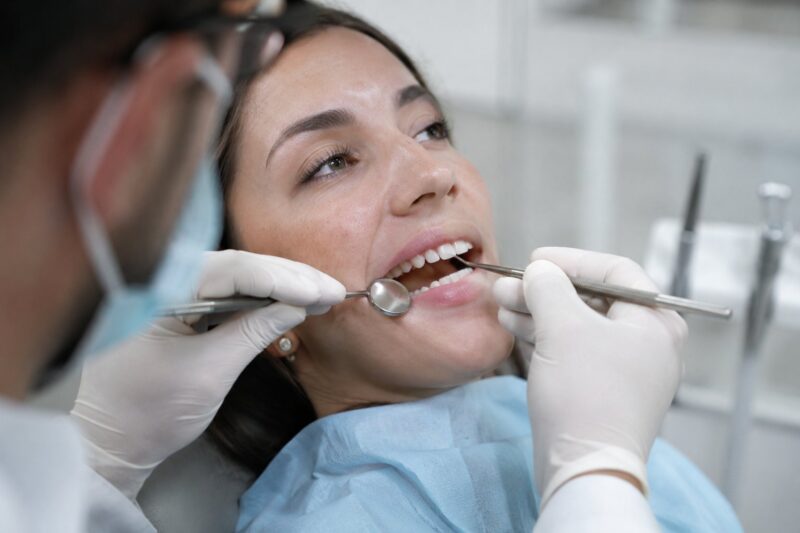
Arrange a dental examination if your front teeth are becoming visibly shorter, repeatedly chipping, or developing new sensitivity.
A dentist can examine the pattern of wear, review your medical history, and assess possible causes such as grinding or erosion.
Sudden severe pain, swelling, or a badly broken tooth needs prompt dental attention.
For gradual wear, treatment may be as simple as protecting the remaining enamel and monitoring changes. However, an examination is necessary to establish how much tooth structure has been lost and if restoration would provide a meaningful benefit.